
Bacterial & Fungal Testing You Can Trust
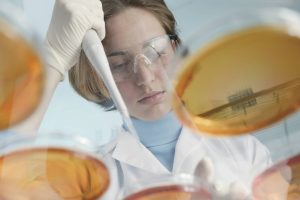 Legacy Environmental Laboratory provides accurate, culture-based and microscopic analysis of bacteria and fungi from a wide range of environmental surfaces and materials. Whether you need contamination screening, post-remediation verification, or identification of unusual microbial growth, we deliver fast, dependable results tailored to your needs.
Analytical Methods
1. Culture-Based Testing
Samples are plated on selective media and incubated to encourage microbial growth. Colonies are counted and identified by morphology, pigmentation, and biochemical testing.
Media Examples: MEA, SDA, TSA
Target Organisms: Total bacterial counts, fungi (e.g., Aspergillus, Penicillium, Cladosporium), coliforms, E. coli
Applications: Remediation clearance, hospital or cleanroom monitoring, unknown growth identification
2. Direct Microscopic Examination
Used for swabs, tape lifts, or bulk materials to assess fungal structures without waiting for culture growth.
Method: Sample prepared on slide, stained if needed, examined under microscope
Results: Presence/absence of fungal elements and identification to genus or morphology
Advantages: Faster results, visual confirmation, useful for low-viability or dead organisms
Sample Types Accepted
| Sample Type | Description | Typical Uses |
|---|---|---|
| Swabs | Collected from surfaces, equipment, HVAC, or drains | Source identification, screening for bacteria/fungi |
| Tape Lifts | Adhesive lifts from visible growth areas | Quick fungal ID, mold documentation |
| Bulk Materials | Building debris (e.g., drywall, insulation) | Assessment of fungi/bacteria in damaged or suspect materials |
| Water Samples | Potable and non-potable sources | Testing for coliforms, E. coli, HPC, Legionella (see WBP page) |
| Air Samples | Viable samples on agar or non-viable spore traps | Refer to IAQ Testing Services |
Our Laboratory Advantage
– Accurate ID by trained microbiologists
– AIHA-LAP Accredited & ISO 17025-compliant methods
– Clear, detailed reports with genus-level ID and interpretation
– Online portal and app for 24/7 project access
– Flexible service options including custom reporting
Analytical Methods
Culture-Based Testing
Samples are plated on selective media and incubated to encourage microbial growth. Colonies are counted and identified by morphology, pigmentation, and biochemical testing. Media Examples: MEA, SDA, TSA Target Organisms: Total bacterial counts, Genus identification, Speciation, fungi (e.g., Aspergillus, Penicillium, Cladosporium), coliforms, E. coli Applications: Remediation clearance, hospital or cleanroom monitoring, unknown growth identificationDirect Microscopic Examination
Used for swabs, tape lifts, or bulk materials to assess fungal structures without waiting for culture growth. Method: Sample prepared on slide, stained if needed, examined under microscope Results: Presence/absence of fungal elements and identification to genus or morphotype Advantages: Faster results, visual confirmation, useful for low-viability or dead organismsFAQ
Q: What is the difference between culture-based testing and direct microscopy?
A: Culture-based testing grows viable microorganisms on selective media, allowing for colony counts and species-level identification. Direct microscopic examination provides rapid results by identifying fungal structures directly on the sample, even if organisms are non-viable.
Q: When should I request genus vs. species identification?
A: Genus identification is often sufficient for determining environmental contamination or verifying remediation success. Speciation is recommended for health-critical environments (e.g., hospitals, cleanrooms) or when dealing with pathogenic organisms.
Q: How long do results take?
A: Turnaround times vary by method:
– Culture-based tests: Bacterial results are typically available within 2–3 days, while fungal results take 5–7 days.
– Direct microscopy: Standard turnaround is 3 days, but expedited results are available in as little as 4 hours with prior laboratory coordination.
Q: What types of samples can be tested?
– Air samples: Spore traps, impactors, viable samplers
– Surface samples: Swabs, tape lifts
– Bulk materials: Insulation, drywall, dust
– Water samples: Potable (drinking water) and non-potable (utility or process water).
Q: Do I need to send samples on ice?
A: Please follow the shipping guidelines provided with your kit or supplies to ensure sample integrity.
Q; Can you help interpret results?
A: Yes! We provide clear, detailed reports and are available for consultation to ensure you understand the data and next steps.